
“We are fundamentally good, not fundamentally flawed”
Author: chadharbaugh
Shunryu Suzuki Roshi
“Life is like stepping into a boat that is about to sail out to sea and sink”
Meditation
Meditation: 6 points of good posture taught by Chogyam Trungpa
1. The Seat:
• Taking your seat means sitting with confidence, you have a right to be there
• Body in alignment; not to far forward or back, left or right
2. The Legs:
• Legs comfortably folded in front, knees lower than hips
• You can use the resting posture if you become uncomfortable. Keeping you back straight, bend your knees and bring closer to chest. You may wrap your legs with your arms to stay steady
3. The Torso:
• “Open front, strong back”, an erect spine without shoulders hunched forward
4. The Hands:
• “resting the mind”, hands on your thighs palms down
5. The Eyes:
• Keep eyes open, the gaze is 4- 6 feet in front of you
6. The Mouth:
• Keep the mouth open slightly, relaxed jaw
¼ of the awareness is on the breath
¾ of the awareness is on the space around the breath
When we are feeling mentally distracted, tag any thought as “thinking” and bring the focus to the exhale
Meditation exercise:
1. Contemplate your intention
2. Review the 6 points of meditation
3. Bring light awareness to the breath
4. Maintain gentle awareness of the breath as it goes in and out, or just as you exhale
5. Label all thoughts as “thinking”
6. Joyfully without judgment bring your attention back to the breath
“When we are present with the dynamic qualities of our lives , we’re also present with impermeance, uncertainty, and change”
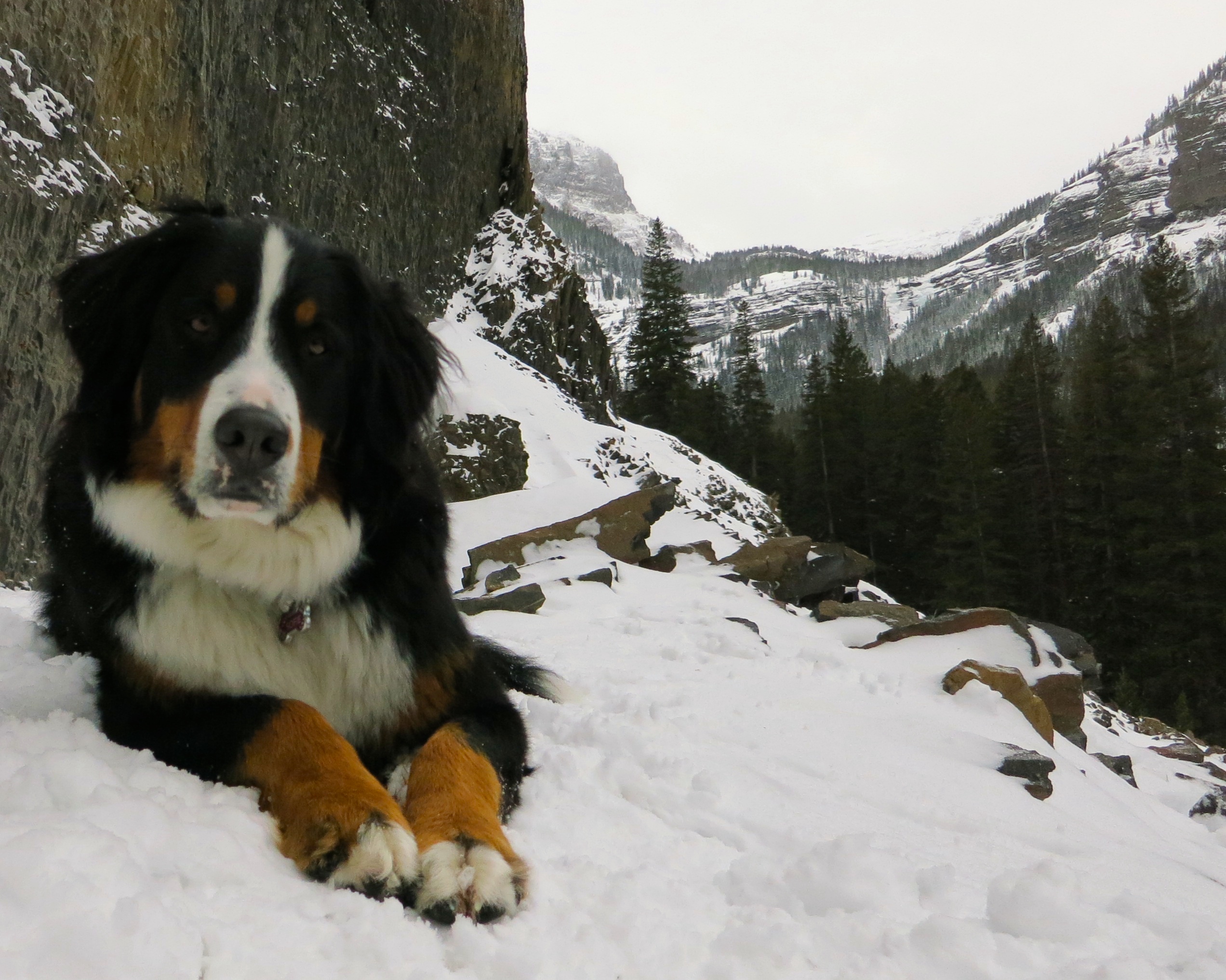
Sophie in Hyalite Canyon, Montana
“a little clown in a furry costume”
Iyengar
“Your body exists in the past and your mind exists in the future. In Yoga, they come together in the present”
B.K.S. Iyengar
 Stagnation Therapy